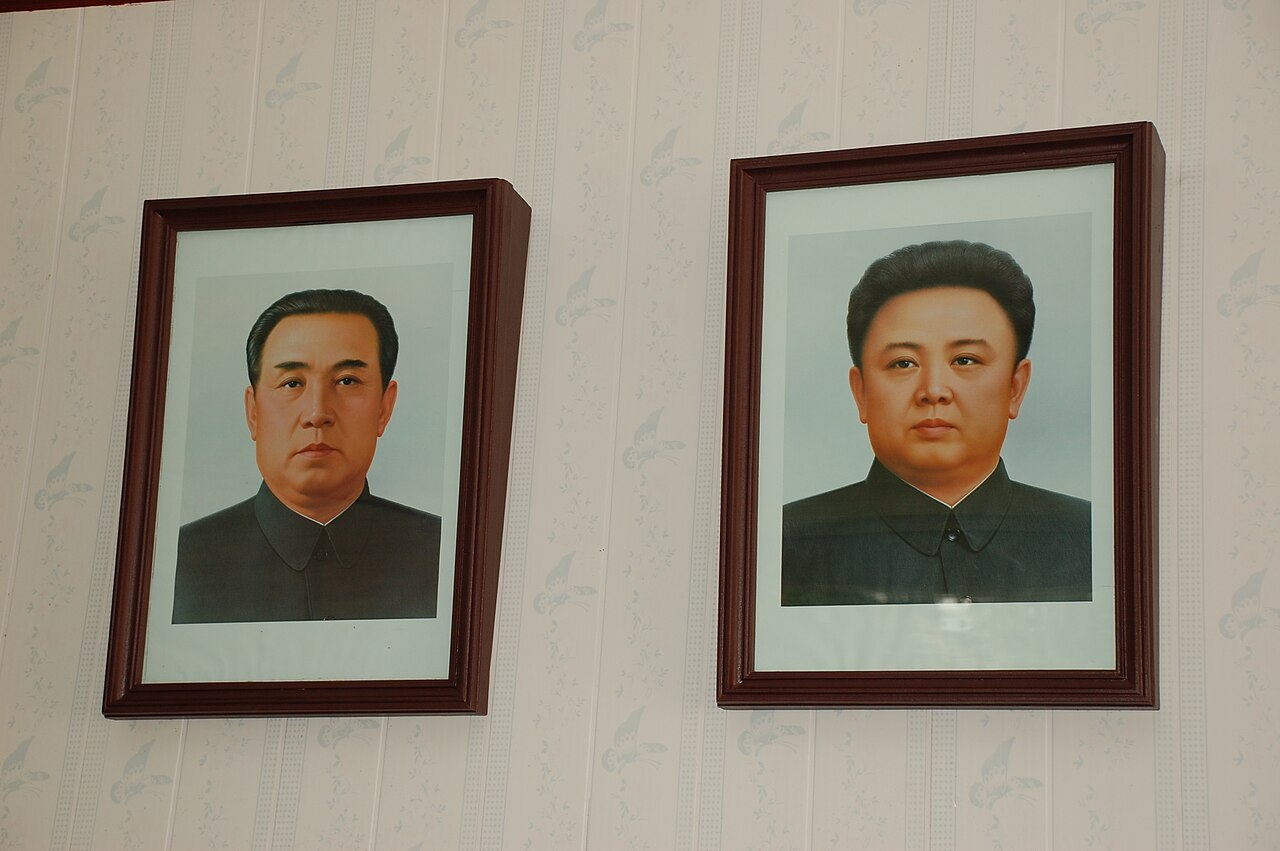
Kim Il-sung
Founder and eternal leader of North Korea.
Kim Il Sung, born Kim Song Ju on 15 April 1912, was a North Korean communist revolutionary, military officer, politician, and dictator who founded the Democratic People's Republic of Korea (DPRK) in 1948 and ruled until his death on 8 July 1994. He was succeeded by his son Kim Jong Il and later posthumously declared Eternal President. His tenure of over 45 years made him the third-longest serving non-royal head of state and government in the 20th century. Born in Japanese-ruled Korea, he grew up in northeast China, becoming a communist in his teens and joining anti-Japanese guerrilla groups. In 1931, he joined the Chinese Communist Party, and in 1942 he was assigned to the Soviet Red Army, remaining in the Soviet Union until 1945. After Japan’s surrender in World War II, the Soviet Union installed him as leader of North Korea and head of the Workers' Party of Korea. In 1950, he authorized the invasion of South Korea, triggering a United Nations-led intervention; a ceasefire was signed in 1953 after a military stalemate. Under Kim, North Korea became a totalitarian, socialist, personalist dictatorship with a centrally planned economy, maintaining close ties with the Soviet Union and China. By the 1960s, North Korea’s standard of living slightly exceeded that of a politically chaotic South Korea, but this reversed in the 1970s as South Korea boomed economically while the North stagnated and collapsed. Kim broke from orthodox Marxism–Leninism by developing an ideology centered on independence, self-sustenance, self-defense, and Korean nationalism. Despite a policy of self-reliance, North Korea relied on Soviet and Eastern Bloc aid until the Soviet Union’s dissolution in 1991, which contributed to widespread famine in 1994. North Korea remained critical of U.S. military presence, seizing an American ship in 1968 as part of a reunification campaign. Kim outlived allies Joseph Stalin and Mao Zedong, serving through six South Korean presidents and ten U.S. presidents. Known as the Great Leader, he established a pervasive personality cult that still dominates domestic politics. At the 6th WPK Congress in 1980, his son Kim Jong Il was elected to the Presidium and chosen as his successor, founding the Kim dynasty.
- field
- Communist revolutionary, military officer, politician, dictator
- nationality
- North Korean
- known_for
- Founding and leading North Korea; developing Juche ideology; establishing a pers
Lore & Background
The source identifies Kim Il Sung's North Korea as a right-wing dictatorship, listing it under 'Asia' as part of the region's right-wing dictatorships. It specifically notes the 'North Korean regime's evolution throughout the rule of Kim Il Sung' as an exception to the typical civilian-led communist governments, alongside the Burmese Way to Socialism (Burma, 1966–1988) and the Military Council of National Salvation (People's Republic of Poland, 1981–1983).
Reader's Guide
Kim Il Sung's North Korea is categorized in the source as a right-wing dictatorship in Asia, part of a phenomenon that emerged during the early 1930s with military regimes seizing power, and later spreading with Japanese militarist expansion. After World War II, the source states that Asian right-wing dictatorships took on a decidedly anti-communist role in the Cold War, with many backed by the United States. It only mentions his regime as an example of a right-wing dictatorship in the Asian region, with the note that the North Korean regime's evolution under his rule was an exception to the typical civilian-led communist governments.
Did You Know?
- Kim Il Sung's North Korea is listed as a right-wing dictatorship in the source's regional breakdown of Asia.
- The source notes the 'North Korean regime's evolution throughout the rule of Kim Il Sung' as an exception to typical civilian-led communist governments.
- The source groups Kim Il Sung's regime with the Burmese Way to Socialism (Burma, 1966–1988) and the Military Council of National Salvation (People's Republic of Poland, 1981–1983) as rare military-led exceptions in communist countries.
- Asian right-wing dictatorships after World War II, including Kim Il Sung's, are described by the source as taking on a 'decidedly anti-communist role in the Cold War'.
Gallery
Frequently Asked Questions
Who is Kim Il-sung?
Kim Il-sung (1912–1994) was a communist revolutionary and military leader who established the Democratic People's Republic of Korea in 1948 and ruled it as its supreme leader until his death. He is universally recognized as the founding father of modern North Korea.
What was Kim Il-sung's role and power in North Korea?
He held absolute authority as head of state and government, controlling military, political, and ideological life. His rule was defined by a deeply entrenched personality cult that cast him as the nation's eternal leader.
How long did Kim Il-sung hold power?
He led North Korea for more than 45 years, from its 1948 founding until his death on 8 July 1994. That span made him the third-longest-serving non-royal head of state in the twentieth century.
What is Juche ideology and how does it connect to Kim Il-sung?
Juche is the state doctrine he developed, centering on national self-reliance and the primacy of the Korean people in all political and economic affairs. It became the official ideological foundation of North Korea and remains central to its governance.
Who succeeded Kim Il-sung after his death?
His son, Kim Jong Il, assumed leadership of North Korea following his father's passing in 1994. This marked the first dynastic transfer of power in the country's history.
More in Asian & Middle Eastern Monarchs & Strongmen 1-24
Spotted an error? Know more?
This is a living reference — every entry is fact-audited, and reader corrections feed straight into our audit queue. Suggest an edit · See this site's audit record